Instar paint and Water + review
Introduction
Hey all,
Welcome to my first post and first review on this blog of mine. I want to start doing some reviews of things that have helped me along the hobby path; so I'll do a few reviews and tips and tricks along the way!
Note: I bought all these paints myself and I'm just giving my honest opinion of my experiences with them.
The purpose of this post is to review the Instar range of Paints(well single paint for this one) and their Water+ line of medium.
One of the reasons Instar came to my attention was their range of Vintage colours. Anyone who has been in the Warhammer hobby for this long knows that GW have changed their paint line a few times over the years with many vintage colours being pushed into the mists of time! The good people at Instar saw a market for hobbyists that wanted to keep their army colours consistent. Many hobbyists have built armies over decades and the need for consistent and reliable paint is key.
For this review I'll review Water+, and IV-38 from the Instar Vintage line.
Water+
Water+ is marketed as bridging the gap between paint and pigment particles when you thin it down. I was interested in this in terms of what I could use it for like thinning paint for coverage over large areas, glazing for subtle colour transitions and a few other applications.
Thinning( well and Glazing too!)
In terms of thinning, I've used Water+ to thin down both Citadel and Instar paint for glazes and for consistent coverage when painting over large panels.
If you look closely at the images I put on this Twitter post, you can see the colour transitions I did on the armor. If you look at the right hand of the miniature you can see the paint gradually gets brighter as the light moves up towards his trigger finger. You can also see the glazing on his left leg where I did a gradual transition toward the foot to give the impression of a shadow slowly building as it goes inwards.
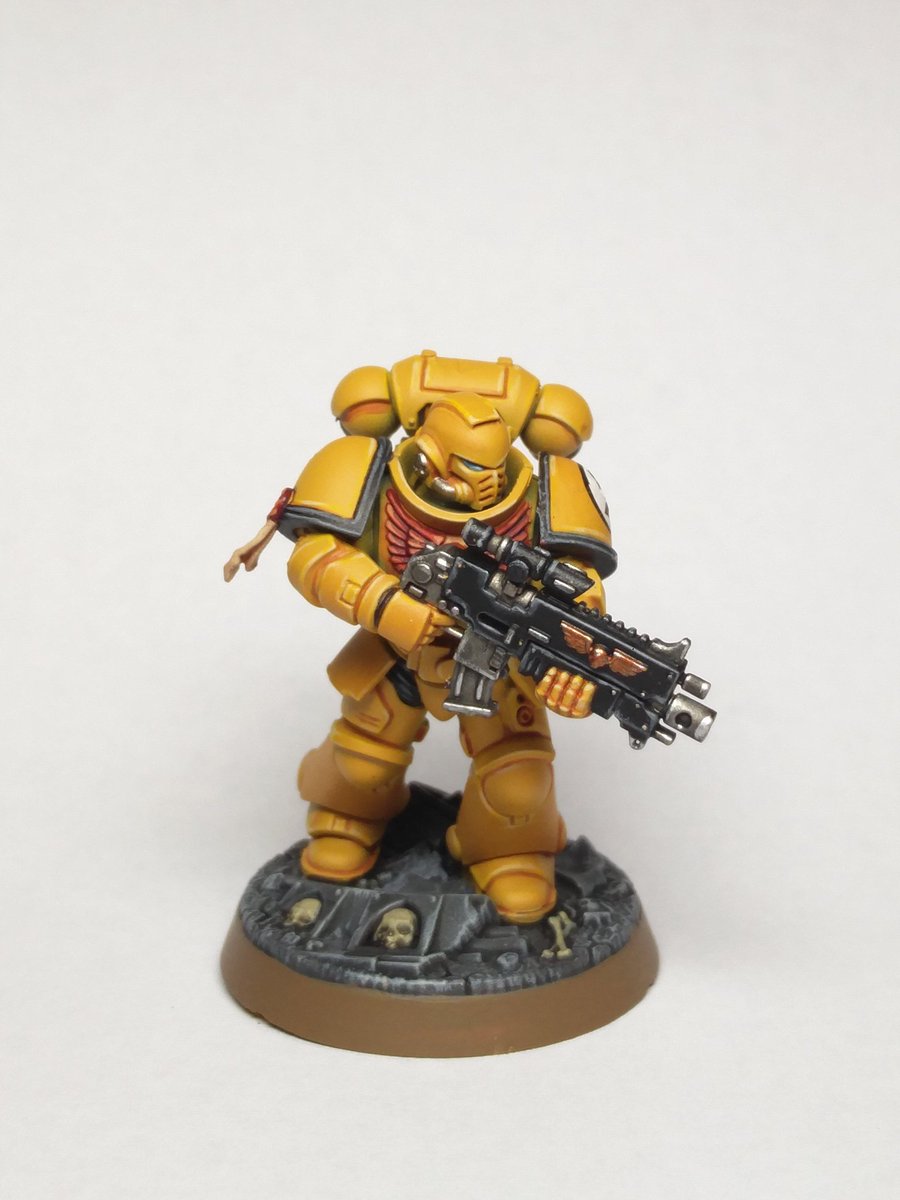
This was achieved with using Instar Water+ and Skrag brown in about 4:1 consistency(about 3-4 drops of Instar+ to about 1 or 2 paint brushes of Skrag brown). A top tip here is after mixing the glaze to clean off your brush. A common mistake I used to make was mixing the glaze then immediately starting to try and glaze. I realised that if I didn't clear off the brush and ensure the correct amount of glaze was loaded onto it, the glaze would act like a wash and go into the recesses. You really don't want this, so ensure you have the correct amount of glaze on it before starting to glaze panels. We're going for a subtle effect here.
Anyway, enough rabbiting on! The Water+ really helps me with this. It gives me consistent results with glazing, and I was really happy the Imperial Fist I painted.
Thinning for coverage
I've used Water+ to thin paint to cover large areas. For example I'm working on some House Griffith Imperial Knights for Adeptus Titanicus and I really wanted to try out IV-38, which is the Instar Vintage version of the old Citadel Bleached Bone.
Some tips for working with this paint:
- Shake it like the clappers. I find I have to really shake it(even with the agitators) for about 3 minutes to really get the pigment mixed.
- Ensure it's warm. I know it's nuts, but I find the pigment mixes much easier if I keep it in my hand while shaking it. It really helps with the smoothness when I mix it.
- If you're coming from the Citadel line of paints, the Instar is more of a gel consistency and needs to be thinned a lot more than you think. I found for my Imperial Knights I have to thin it with 3 drops of Water+ to 1 drop of IV-38 Bleached Bone.
- For IV-38 you're better off doing really really thin coats. It sounds tedious, but if you have a production line of units going, by the time you get to the last one the first coat will be dry and you can cycle back. It's worth it!
Here are some photos of the carapaces of the knights I'm working on where I applied the above tips:
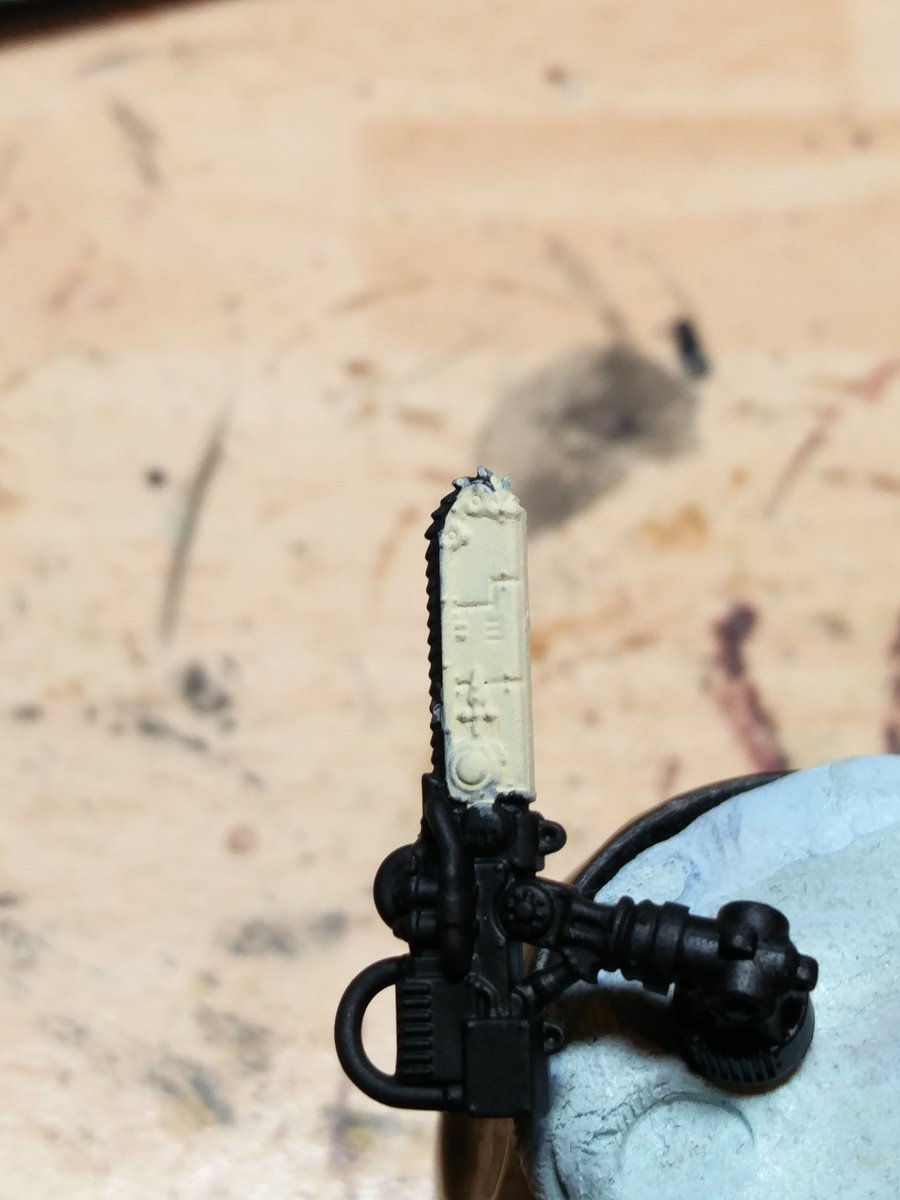
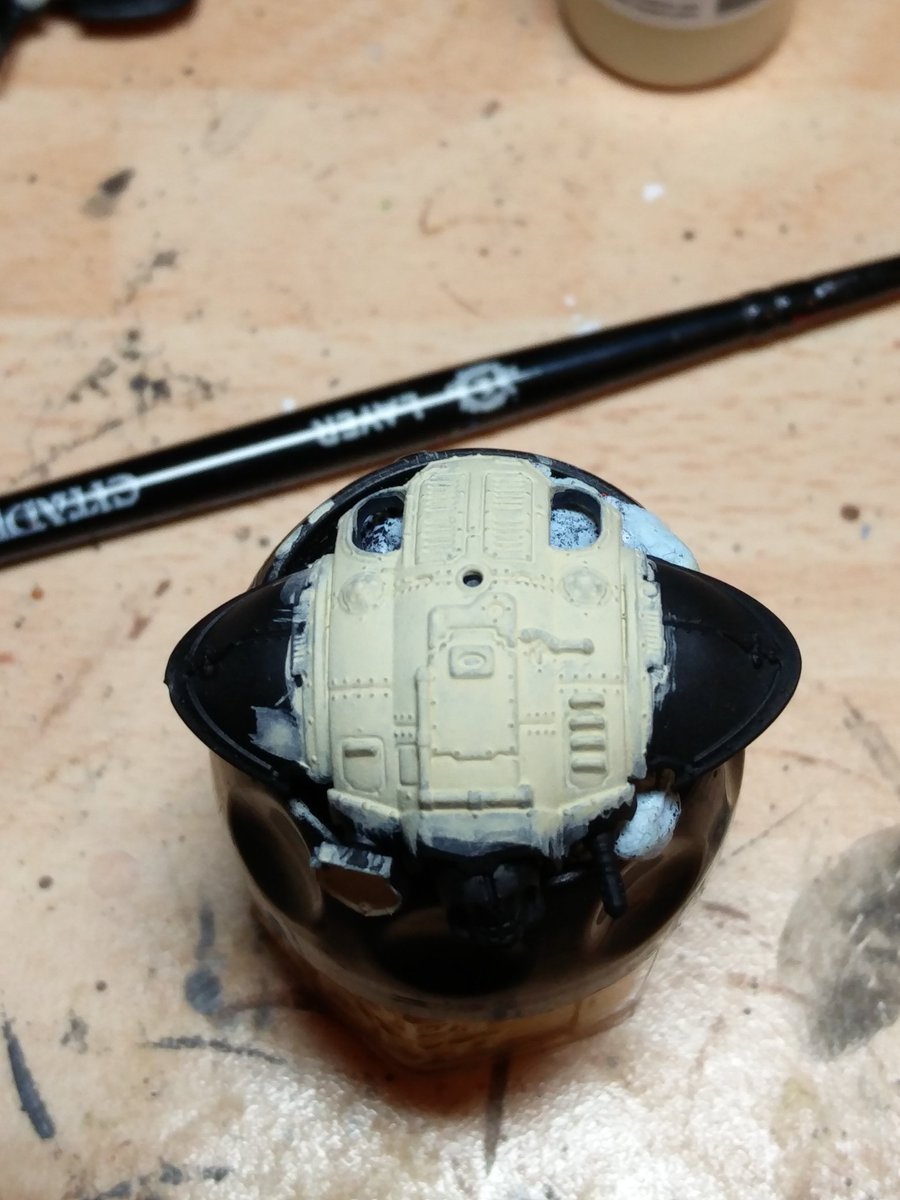
As with all bright colours coverage can take many layers, and being more of a painter, I'm ok with that. The images above are on about 3 layers so far, but it really shows how crisp the layers can build up without clogging any of the detail.
Conclusions
Water+
I really really like Water+. It's helped me a lot with my confidence in glazing and working with painting large areas of armor when I want a really smooth finish with none of the detail clogged. It's applications for glazing really really helped me push the level of quality of the Imperial Fist I painted above and it's a paint job I'm well happy with! So my recommendation would be to give it a go. It's slowly becoming a must have for me, and I'm impressed with it!
IV-38
IV-38 is the first of the vintage line of colours I've played with. It's taken me some getting used to, and initially I didn't like it because it was the first colour I used outside of the Citadel range. However, once I learned how to use the paint, it's reaction to mixing on the wet palette, and how it applied off the brush, I've really started to warm to it. Once I finish painting these knights I'll know 100% how I feel about it, but I'm happy out so far!
Hope you enjoyed the first review! Cheers!


Comments
Post a Comment